Friday, June 12, 2015

Aboriginal Jadeite Adze

         As we approach the date of the Annual Aboriginal Gathering and Pow Wow, the recent donation of a jadeite adze found south of Grimshaw area by Bill Veidt comes at an opportune time.
Jadeite Adze (on loan from Bill Veidt)
         Jadeite is a variety of jade, a strong and hardy material characterized by its distinctive green hue. Its strength lends itself well to tool-making, though the material itself is quite rare. This adze was therefore most likely an object of great importance and prestige. The crafting of such an device was a labour-intensive process, with countless hours of sawing, cutting, grinding and polishing. The product of these efforts is a long-lasting and high-quality tool that is a testament to the skill and ingenuity of the First Nations craftsmen. The age of this adze could range from hundreds to thousands of years old. As you can see, it has withstood the test of time remarkably!
Bill Veidt
        While the majority of jadeite artifacts recovered in Alberta were found in the Peace River region, most jadeite tools are associated with the west coast of BC. This is because the First Nations peoples of BC had increased access to quarries and had developed larger-scale stoneworking and woodcutting practices relative to the more mobile people of the plains. The geology of BC is also such that jadeite, a metamorphic rock, forms much more commonly in mountainous regions raised by plate subduction. It is believed that this stone in particular came from the Fraser River Valley of BC. So, this tool was likely traded from afar and had quite a journey before arriving in the Peace Country.

Example of a completed adze
         Even more ancient tools can be found in the Archaeology Case in the Peace River Gallery of the museum, including chert and even black obsidian artifacts.

Friday, June 5, 2015

The Holt Geology Collection

With summer almost upon us, now is the perfect time to turn our eyes to the natural world and appreciate the beauty of the Peace River landscape. The recent donation of the Holt Collection of geological artifacts provides a great opportunity to examine some of nature’s most exciting relics. The Holt collection includes a diverse array of rocks, minerals and fossils that were collected by Don Holt throughout his life.


 On a hot and sunny Friday morning, the Peace River museum was lucky to have the help of Don (a different Don!) and Jim, two local rockhounds, to aid Collections Assistant Rhys in identifying the items in the Holt Collection and determining their origin. While many were from the exotic locales that Don Holt had visited during his travels, such as the African agates and Brazilian opals, many more were found to have originated in the Peace River area. Don described the intricate crystal structure of the geodes, and Jim identified many fossil types that he himself had found in the region.
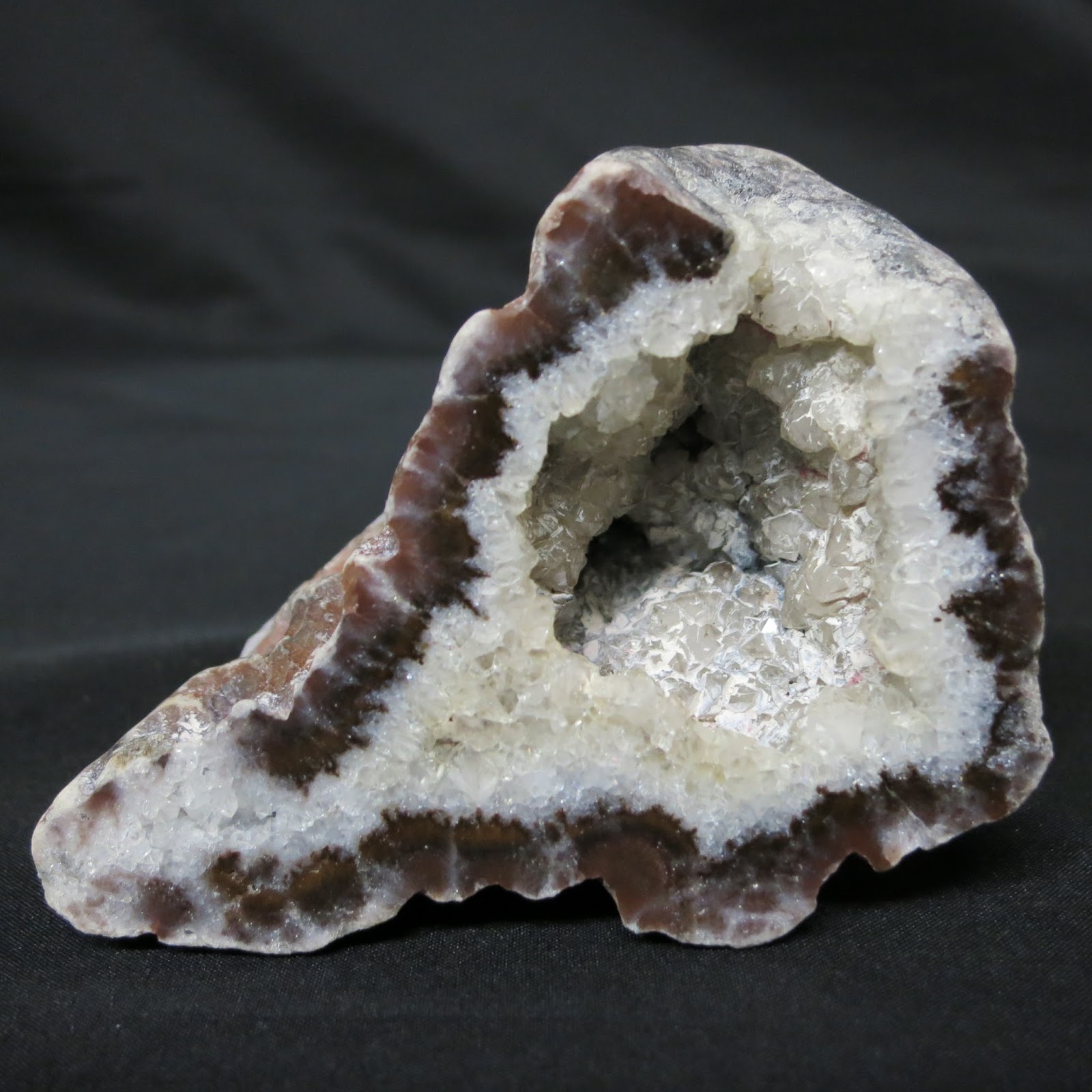
Geode
              The Peace River museum has its own rock and fossil display, which can be found contained in lighted display cases in the Peace River Gallery.


Ammonite Fossil

Monday, May 25, 2015

All Aboard!


“We are advised that as a special feature for the visitors, who will be in Peace River over the 24th of May, the river boat D. A. Thomas, will make a river excursion on that day, leaving Peace River at three o’clock in the afternoon. The trip will be for 25 miles up the river, arriving back at Peace River about 10 o’clock at night.

“There will be an orchestra aboard and provision will be made for dancing. This will be a very pleasant trip and no doubt will be availed of by a large number of the visitors in Peace River ...”

The aforementioned advertisement was seen in the May 17, 1926, Grande Prairie Herald. It is imagined that the Boudoir piano (ca. 1904-1915) on display in the Peace River Museum, Archives and Mackenzie Centre was instrumental in providing music for the dancers on that trip.

Boudoir pianos were designed for people wishing a keyboard instrument, but who were restricted to a small space. Allan Sproul donated the piano to the Museum in 1983. His parents, Rowland and Clare, had acquired it from Ellen Eddie about 1955.

PRMA 1980.1140.002
PRMA 1992.020.007


Friday, May 15, 2015

Peace River swept by Orange Crush


For the first time in forty-four years, Alberta witnessed an “orange crush” that swept the province into a new provincial government led by the NDP. Peace River experienced its own Orange Crush much earlier when the new bottling plant for the famed soda beverage established itself here in the 1920s/1930s. At that time it was located at 9812 100 Ave (where the present day City on a Hill Church is), and was owned by the Scott Fruit Company.
In 1949, George and Vivian Pratt moved to Peace River and bought the old bottling depot.  They decided to build a new plant in 1953, and constructed it parallel to Main Street on 99th Street. Orange Crush at the time cost between 7 and 10 cents a bottle, and was first bottled in crinkle glass bottles before the standard glass bottle became the preferred. The depot also bottled Kik Cola, American Dry, Grape Crush and Root Beer. Deliveries went out to Worsley, Hotchkiss and around Peace River.
 
 
The picture shows the new Orange Crush plant on 99 Street in the 1950s. Third from the left is Edward Pilkafski, and fifth from the left is Donny Lovelock. Edward worked at the depot for six and a half years as a delivery man.

The Pratts sponsored a women’s baseball team during the company’s operation, and the museum has some of the memorabilia in its collection, including one of the player’s sweaters.
 
 
The Pratts decided to sell the business in 1963, and the building was remodelled into offices. Though the bottling depot in Peace River is now no more, many of us still enjoy an Orange Crush pop every now and again.

Friday, May 8, 2015

A Royal Soother


With the recent arrival of Princess Charlotte, we thought we would feature this antique soother, manufactured in 1897, as part of our collection and currently on exhibit in the Toy Stories. The soother was donated 1977 by Jean Hargrave (nee Cruickshank).
           Although it appears wooden, the soother is made from natural rubber, as you would expect from an object meant to go into a baby’s mouth! Although this material would go on to revolutionize modern industry in Canada, this rubber was likely imported from South America. The budding overseas rubber industries closely protected their trade, and exporting rubber tree seeds from Brazil was even considered a capital offense at that time.

PRMA 77.759.5
On one face of the soother we can see a picture of Queen Victoria, the ruling monarch of England during that time. Despite gaining independence from England in 1867, many Canadians retained fond memories of their former rulers, and the continued influx of English immigrants contributed to the enthusiasm towards the Crown. Even 108 years after the manufacture of the soother, the Royal Family remains ever popular with Canadians, especially with the recent birth of Princess Charlotte. However, I don’t think the modern and savvy Prince William would be too happy using the likeness of his great-great-great-great-grandmother on his daughter’s pacifier!

Tuesday, April 28, 2015

The   River   Project   Story        
Members of the Valley Peacemakers Quilt Guild are continuously challenging themselves. From year to year, the challenges are different and unique to the Guild. The creative results are displayed in the Guild’s annual show in the DMI Gallery of the Peace River Municipal Library.
The idea for the River Project quilt artwork now displayed in the Museum, gelled following a sighting in a book and seeing a similar installation in Oregon. What better project, with the rivers that merge in our community, thought Carole Gold, as she issued the challenge to fellow quilters.

They had a year to prepare for the 2014 Guild show. It was the Guild’s first group artwork project. What you see is the work of 13 individual quilters (Danya Frank, Jill Wood, Vivian Massier, Carole Gold, Aralee Tailleur, Hildegard Campsall, Beverly Hafstein Pichette, Lois Laurin, Margaret Stewart, Carol Scobey, Chris Warne, Alice Olson, Elizabeth Daigle). They followed the guidelines set out by the issuer of the project challenge. Each panel is an indication of the artist’s self-expression and creativity. Each has a story behind its creation.
The Peace River Museum, Archives and Mackenzie Centre acquired this work of art through donations made in memory of Robert (Bob) Campsall, as well as a donation from the Campsall family.
Bob delighted in not only living by the Peace River, but also by watching, with wife Hildegard, its many moods from their living room window.


Pictured are: Emily Harris, granddaughter; Erin Harris, daughter; Hildegard; Patti Campsall, daughter, and John Errington. The panel behind Erin was created by Hildegard, featuring an eagle, which the Campsalls used to watch as it and its mate enjoyed the wind currents over the river.
 

Thursday, April 16, 2015

Farewell Megan!


Museum blogs usually feature artifacts and their story or events and the reason behind them. This time, we’ll change it somewhat. We’ll delve, briefly, into the story of the person responsible for many of the blogs over the past five years – Museum Collections Technician Megan Purcell.

Megan came to the Museum well-equipped educationally and with the experience necessary to meet the challenge of managing the Museum’s extensive and growing artifact collection, including one of her favourite subjects – rocks and fossils. In addition, she designed and assembled the Museum’s displays and featured exhibits. As well, she made presentations to groups as part of the Museum’s outreach program.

Megan has done so much more. She is renowned for culinary talents on display at Museum gatherings and for staff special occasions. Alas, as of the beginning of May, Campbell River, BC, and its Museum will reap the benefits of Megan’s skills as she moves on professionally and personally.

She will be missed, not only by those of you she has assisted during her tenure, but also by Town and Museum staff – her colleagues.

Farewell Megan. Take care.
 

Friday, March 20, 2015

It's a Mad Hatters Party!


It's a Mad Hatters Party when the Museum and the Toy Library join together for a morning of fun and play! Next Friday, March 27th, 2015, the Museum and the Toy Library (now Peace Playland) are hosting a Mad Hatters Party for children ages 1 - 5, where everyone is invited to wear their favourite hat.

From 10 - 11:30 am, children and their parents or grandparents will be able to play with toys that the Toy Library will bring with them as well as the toys that the Museum has out in our Toy Stories exhibit.

We even have a dress-up station in this exhibit! Of course, once you're wearing your finest dress-up attire, you'll want to strike a pose at the picture station!

We invite you to join us that morning, wearing your favourite hat, for only $2 per child, with $1 each going to the Toy Library and the Museum.


Wednesday, March 11, 2015

Was it a bird? Was it a plane? No, it was a meteorite!


The town of Bruderheim recently commemorated the fall and recovery of the Bruderheim meteorite in 1960. What an impact this arrival from outer space must have had on the community – especially in light of the ‘race for space’ that the United States and the USSR were engaged in so tightly. Sky watchers must have been in awe. Did you know that the Peace River Museum collection includes a piece of that space rock? It was donated by the Percy Hills family from Judah Hill district.
Speaking of the Hills family, did you also know that three years later, the Peace River meteorite came to Earth and that, then graduate student in geology at the University of Alberta, Len Hills, was part of the recovery team? The Museum Library includes a report of the collection of specimens and eye-witness reports. The report (1964) begins:
                “Peace River, as a detonating bolide, entered the Earth’s atmosphere at 4:35 a.m. MST March 31, 1963, creating a flash visible for over 100 miles, followed by detonations resembling sonic booms over a 4,000-square-mile area.”  It goes on to say that March was "a time of year and day most unfavourable for recovery. However, this was Sunday morning and the Peace River country had not quite settled down from a frontier Saturday night. Peter Karpiak was up, administering to a sick horse; Alfred Bobier was looking for new-born lambs and calves .... A number of Peace River citizens were returning from parties. To many slumbering observers it was only an awakening flash and a bang, which resulted in a prowl of the premises to see if the oil heater had exploded.”

Further along in the report, the team writes of the recovery process, which determined that the ellipse of the fall was in the Brownvale area and it naturally yielded the highest concentration of specimens. One such sample,  labeled Peace River #1  and weighing in at 18 pounds, was discovered by university student John Westgate. “To the folklore of the land of Twelve-Foot Davis should be added the name of Eighteen-stone Westgate, because his discovery, like Davis’s rich fractional claim, proved to be an incredible stroke of fortune.”
If you would like to read more from the report, drop by the Museum Library between 10 a.m. and 5 p.m. Monday through Saturday.
(Source: The Peace River Meteorite: Fall and Recovery./ R.E.Folinsbee and L.A.Bayrock, Department of Geology, University of Alberta: 1964)